
Materials
What an interior is actually made of.
Six materials do most of the work in almost every room we build. Here is how each one is specified, what it asks of the install, and how it behaves once you live with it.
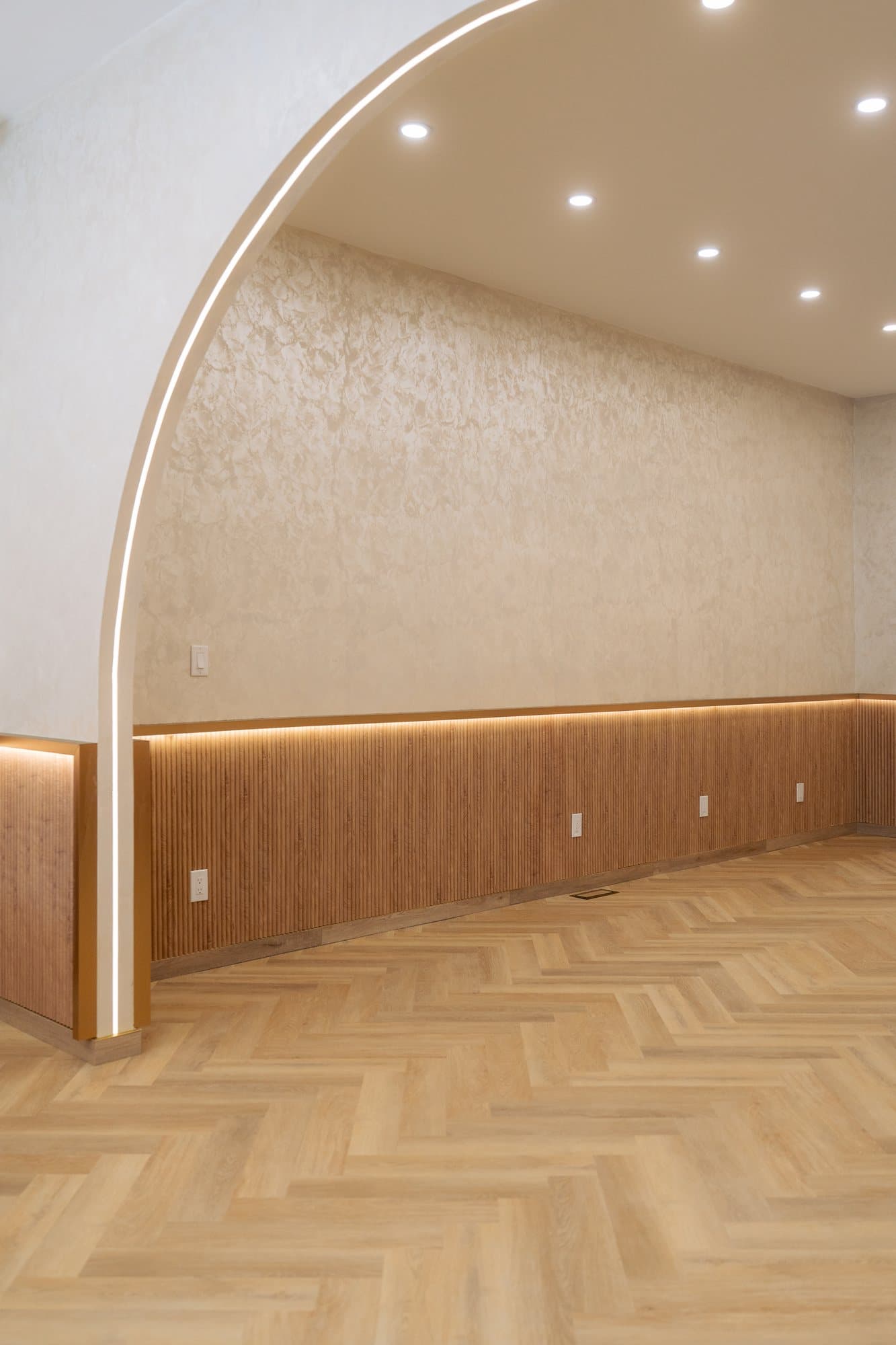
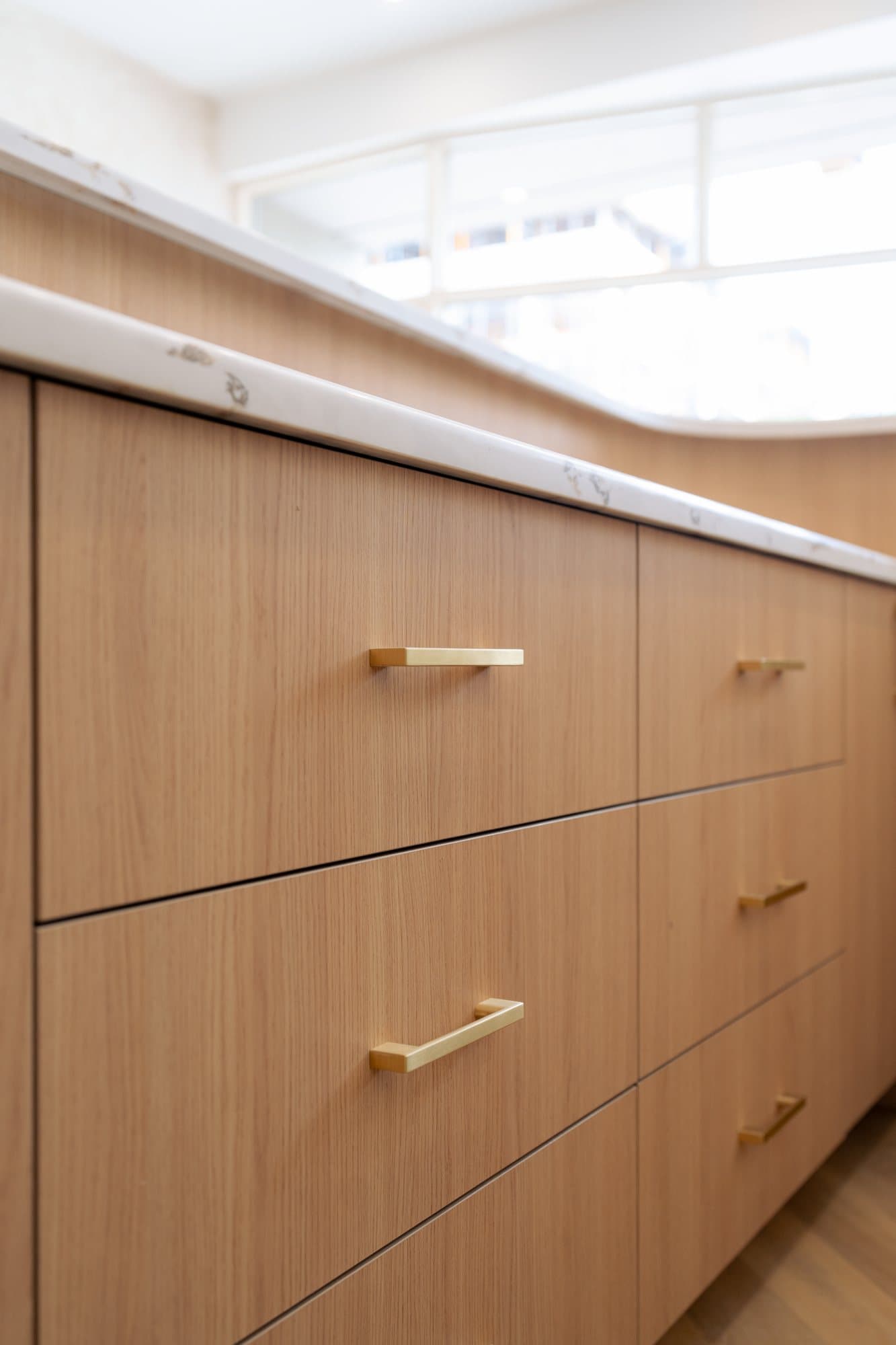
01 · Rift-sawn, hardwax oil
White oak
Rift-sawn so the grain runs straight and the boards stay flat, finished in hardwax oil rather than a film so a scratch can be spot-repaired instead of resanded. It is the default for millwork, floors and stair treads because it takes a knock and still looks intentional five years in.
Marble and natural stone
Selected at the yard, laid out against the vein
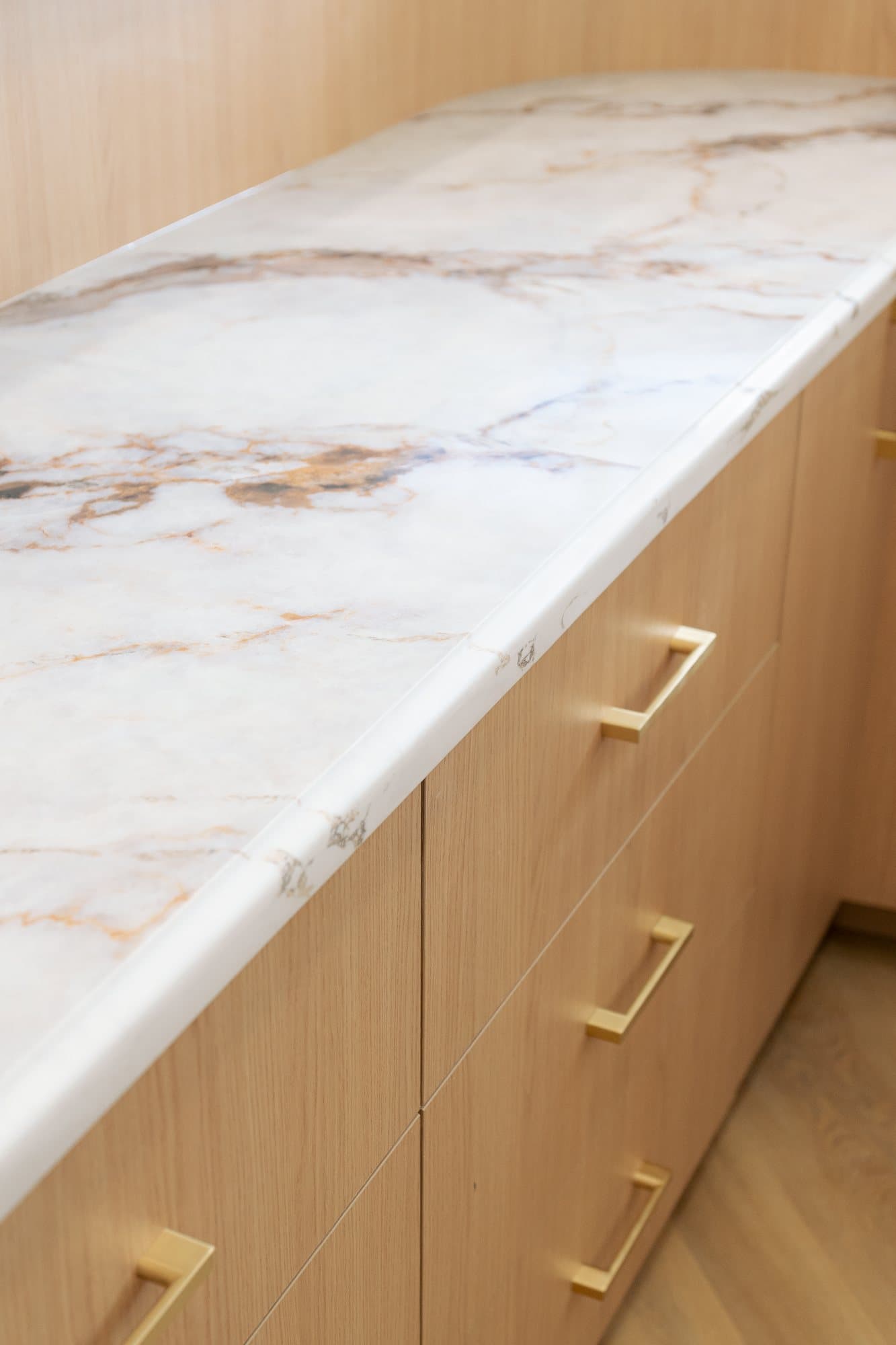
A slab is a one-off, so it gets chosen in person and the cuts get drawn against the vein before anything is fixed. Mitred edges are built so the vein wraps a corner and the joint disappears. Book-matched panels are dry-laid first, because a butterfly only lands once.
Counters, feature walls, floor inlays, window benches
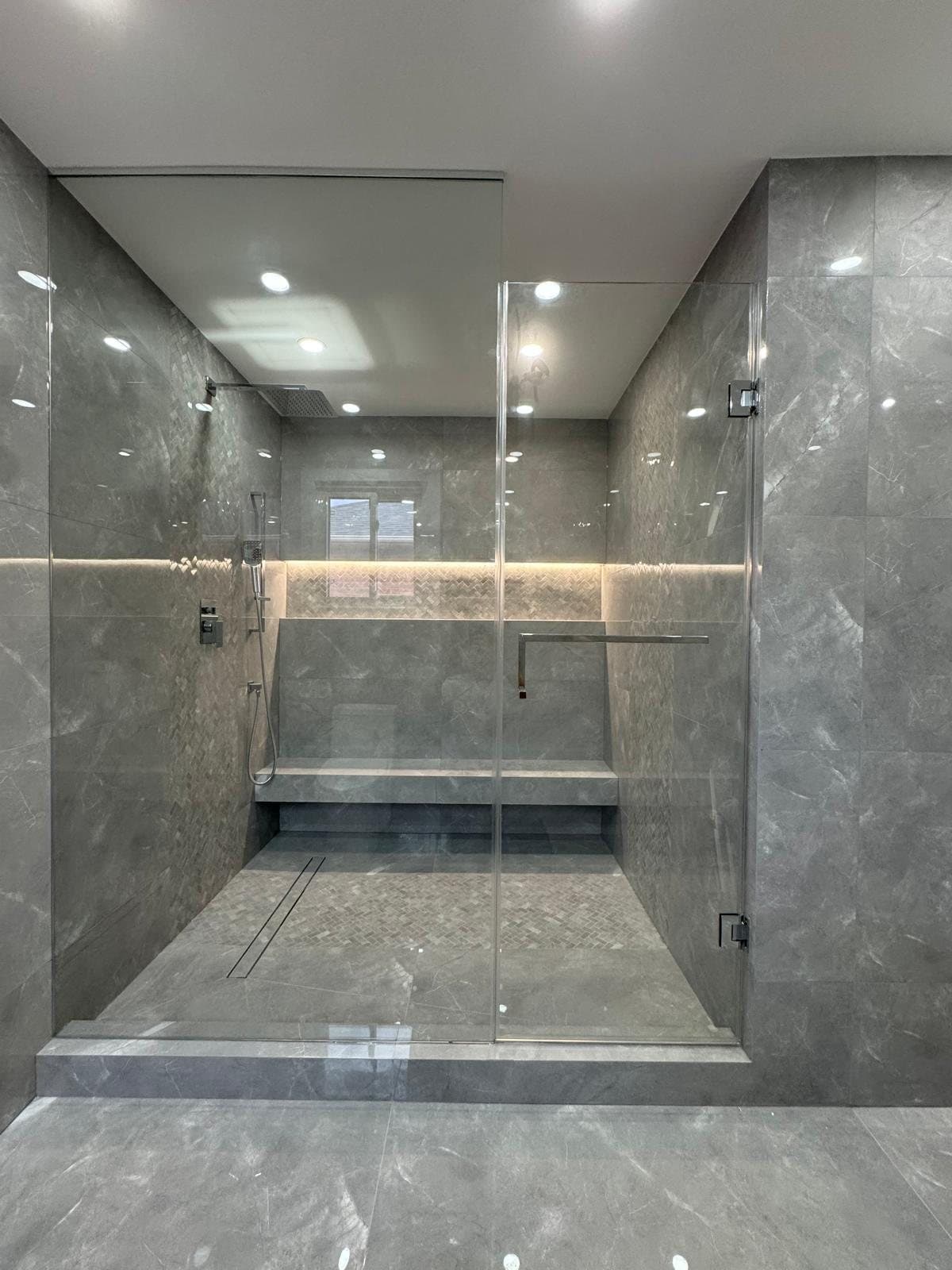
03 · For wet rooms that have to stay flat
Large-format porcelain
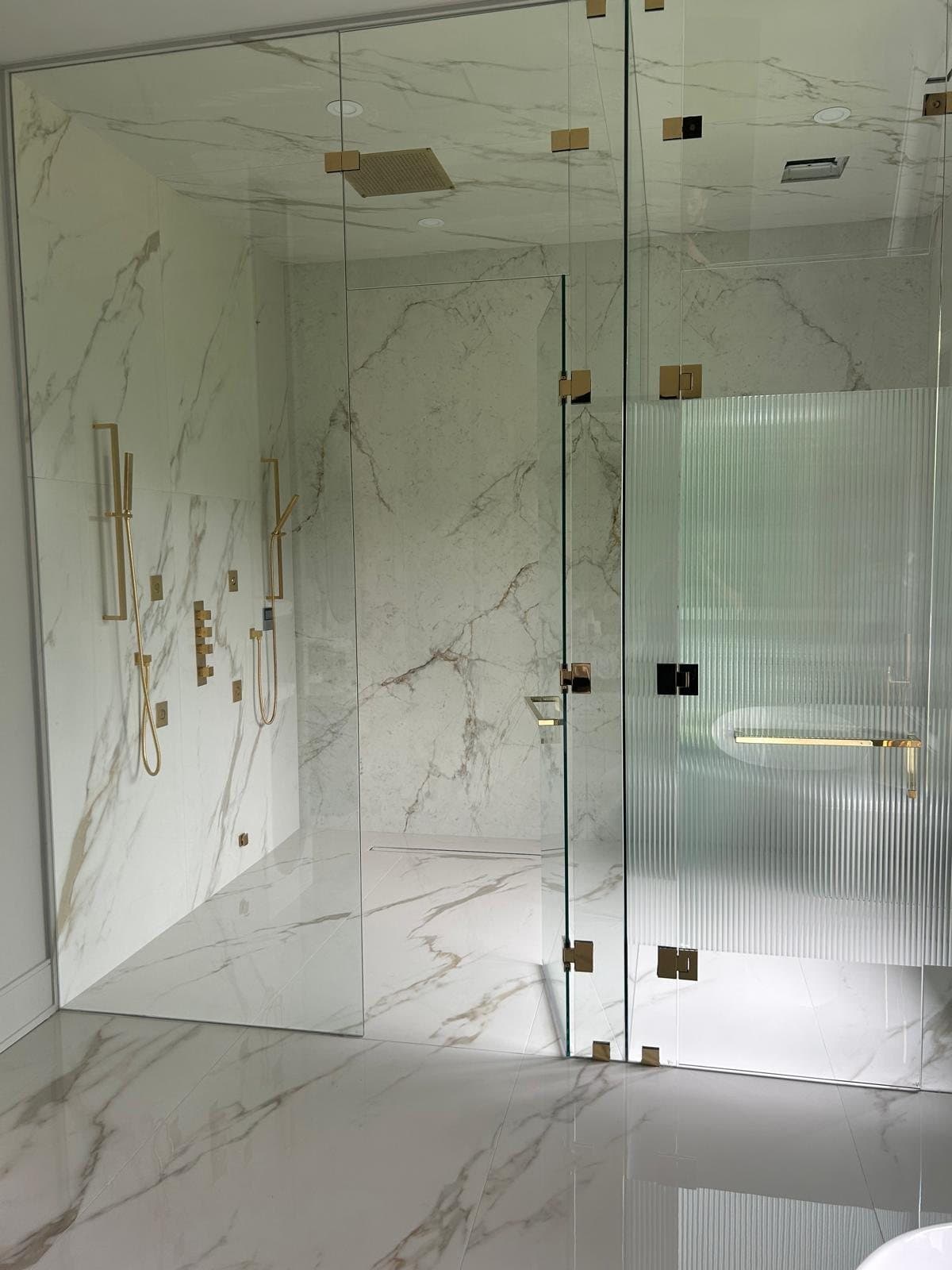
Where a room takes water every day, large-format porcelain gives the look of stone without the sealing regime. It is unforgiving to install: the substrate has to be dead flat and the drain dead level, or every joint tells on you. That is the work, and it happens before anything is visible.
Showers, wet rooms, bathroom floors

04 · Troweled in coats, not rolled
Venetian plaster
Plaster shows every sin in the wall behind it, so it starts with the substrate. Built up in coats and burnished, the movement in the finish reads as depth rather than as patchiness. It is the one finish that makes a flat wall worth looking at.
Unlacquered brass
Left to patina
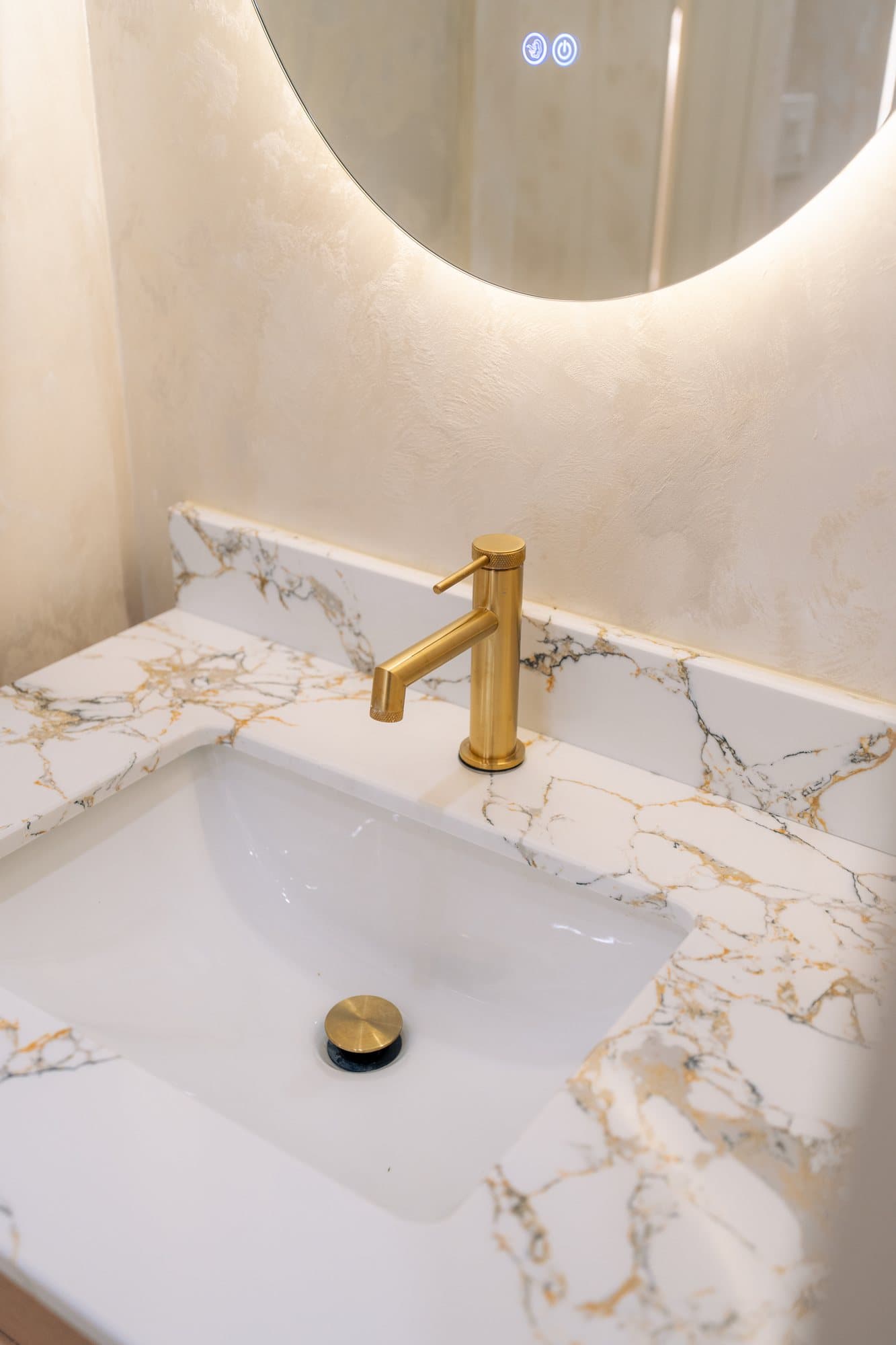
Unlacquered means it will darken and mark with use, which is the point: it ages with the room instead of chipping like a plated finish. If you want it to stay bright it takes a polish now and then. We will tell you which you are choosing before it is ordered.
Hardware, tapware, shower sets, trim and inlays
06 · Landing on a joint, not across one
Frameless and reeded glass
Frameless glass is set out with the tiling, so the panel lands on a joint rather than across one and the hinge falls where the substrate can carry it. Reeded glass does the same job as a wall when a room needs light through it but not a clear view.
Shower enclosures, partitions, balustrades
Not sure what suits the room, or the budget? That is what the walkthrough is for.
Book a walkthroughService area
Toronto and the GTA
Residential and commercial